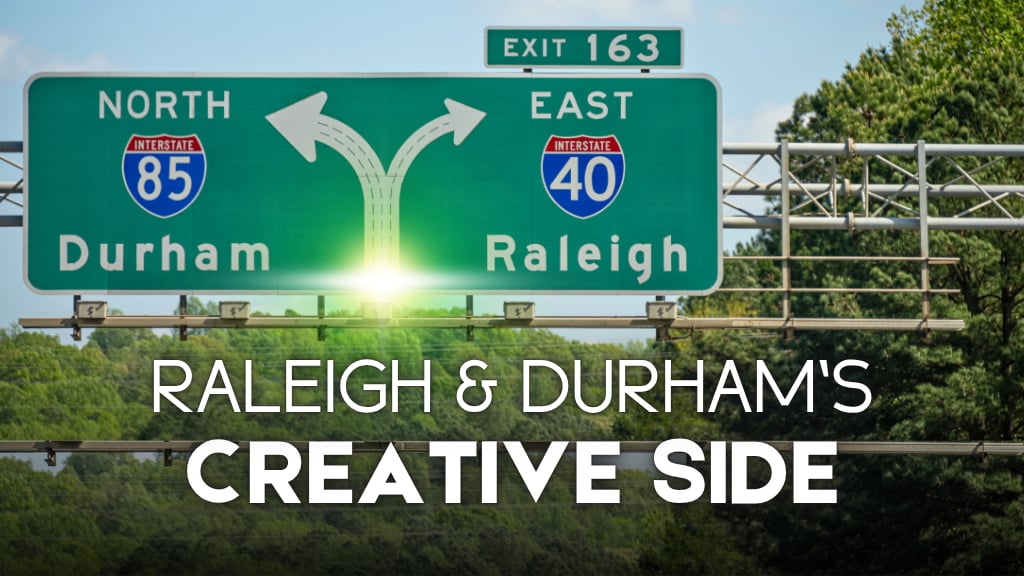
A city can have beautiful homes, new office buildings, and plenty of restaurants, but that does not automatically give it a personality. The places we remember are shaped by the people willing to take chances, introduce new ideas, and create spaces where others genuinely want to gather.
That is what I wanted to explore during this episode of American Dream TV. We began in downtown Raleigh with my friend David Baldwin, a creative director, entrepreneur, author, and one of the people who has helped shape the Triangle’s creative business community. Then we headed to Durham to see how an idea can grow into something much bigger when a business focuses on building community rather than simply selling a product.
The Triangle’s Creative Side Is Hiding in Plain Sight
When people hear “Research Triangle,” they naturally think about technology, universities, medicine, and scientific research. Those industries are an important part of the region, but they are only one side of the story.
Raleigh and Durham also have a growing creative class made up of people who influence how neighborhoods look, how businesses communicate, where residents spend their weekends, and what brings communities together. They are not always working inside traditional art studios. They may be designing brands, opening restaurants, launching breweries, producing music, restoring old buildings, or finding new uses for spaces the city had forgotten.
The City of Raleigh recognizes arts, culture, and creativity as important contributors to quality of life, economic activity, and community connection. Raleigh supports public art, cultural organizations, arts venues, artist programs, and creative projects throughout the city.
That investment matters in real estate, even when buyers do not immediately realize it. People are not only choosing a house. They are choosing the restaurants they will visit, the events they will attend, the streets they will walk, and the kind of community energy they want around them.
Downtown Raleigh Is More Than Government Buildings and Cranes
Downtown Raleigh has changed considerably over the years, and the transformation is still unfolding. New residential buildings, restaurants, cultural venues, adaptive reuse projects, and local businesses have created a downtown that feels very different from the quieter government center many longtime residents remember.
During the episode, I met with David Baldwin at his Raleigh advertising agency. David has spent decades working in creative industries, helping brands communicate their values while also asking a bigger question: Can a business be successful and still make life better for the people around it?
Creativity Becomes More Powerful When It Has a Purpose
David described his approach as using business as a force for good. His agency has worked with companies and organizations connected to sustainability, technology, consumer products, and social impact. The goal is not simply to create an attractive campaign. It is to help businesses build something people can believe in.
That idea feels especially relevant in Raleigh. The city has enough growth to attract major companies, but it remains small enough for local entrepreneurs and independent businesses to make a visible impact.
You can see that influence in restored buildings, public art, locally developed restaurants, small creative agencies, music venues, and gathering spaces throughout downtown. These places give residents a reason to spend time in the city rather than simply commute into it and leave at the end of the day.
Creative Spaces Can Change How a Neighborhood Feels
An art studio, coffee shop, brewery, boutique, or neighborhood restaurant may seem like a small addition, but several of those places together can change how people experience an entire district.
They create foot traffic. They give neighbors somewhere to meet. They make an area feel active after business hours. Over time, they can help a neighborhood develop an identity that is recognizable even to people who do not live there.
Raleigh’s public arts efforts include galleries, artist residencies, creative fellowships, public art projects, cultural events, arts centers, and neighborhood-based funding. Those programs reflect the city’s belief that creativity belongs in everyday public life rather than being limited to major museums or formal performances.
Durham Has Never Been Afraid of Reinvention
After leaving Raleigh, we headed to Ponysaurus Brewing in Durham. That move between the two cities captured something I love about the Triangle: Raleigh and Durham are connected, but they do not feel interchangeable.
Raleigh often feels polished, organized, and steadily evolving. Durham tends to feel more experimental. It has a long history of entrepreneurship and industry, along with a willingness to reuse old spaces and allow new ideas to develop their own personality.
Ponysaurus Was Built Around More Than Beer
David helped co-found Ponysaurus with a vision that went beyond producing another local craft beer. The larger idea was to create a place where people could gather, spend time together, and feel part of a community.
That is one reason the Durham location feels less like a simple production facility and more like a neighborhood destination. The brewery includes a taproom, beer garden, and pizzeria designed to give people a reason to stay rather than pick something up and leave. Ponysaurus has since expanded beyond Durham, with locations in Raleigh and Wilmington as well.
The success of a place like this says something important about Triangle residents. People here value businesses that provide an experience and a sense of belonging. The product matters, but so does the atmosphere, the setting, and the feeling that you are welcome to settle in for a while.
Community Is Often Built in Ordinary Moments
The word “community” gets used so often that it can begin to sound like marketing language. In reality, community usually develops through very ordinary moments.
It happens when neighbors meet for dinner. It happens when a local business hosts an event, supports a cause, or creates a welcoming outdoor space. It happens when someone moves to a new city and gradually begins recognizing familiar faces.
Those experiences are part of why lifestyle matters so much when choosing a home. A beautiful property can meet every requirement on paper, but buyers may still feel disconnected when the surrounding area does not match how they want to live.
The Triangle’s Best Feature May Be Its People
The creative class is not important because it makes Raleigh and Durham seem trendy. It matters because creative people help cities become more human.
They turn empty buildings into destinations. They create places where strangers can sit near each other and eventually become neighbors. They help businesses communicate what they stand for. They add music, food, design, art, humor, and personality to ordinary city life.
That was my biggest takeaway from spending the day with David Baldwin. Growth may bring people to the Triangle, but ideas, relationships, and community are what persuade many of them to stay.
Thinking about buying or selling in Raleigh, Durham, or elsewhere in the Triangle? Contact The Sheri Hagerty Group to explore the neighborhoods, lifestyles, and local communities that make this region much more than a collection of homes and office buildings.
FAQs
What is the creative class in Raleigh and Durham?
The creative class includes artists, designers, musicians, writers, entrepreneurs, advertising professionals, restaurateurs, technology workers, and others whose ideas and work help shape the culture and identity of the region.
Is Raleigh or Durham better for creative professionals?
Both cities support creative communities, but they offer different atmospheres. Raleigh often feels more polished and structured, while Durham is known for independent businesses, adaptive reuse, and a more experimental personality. The better fit depends on work, housing preferences, commute, and lifestyle.
Where can residents experience arts and culture in Raleigh?
Raleigh offers museums, public art, galleries, arts centers, music venues, festivals, artist programs, and community events throughout downtown and surrounding neighborhoods.
What makes Durham’s local business scene distinctive?
Durham is known for independent restaurants, breweries, creative businesses, historic spaces, and businesses that place a strong emphasis on community experience and local identity.
Does living near creative districts cost more?
Popular districts with restaurants, entertainment, walkability, and redevelopment may experience stronger housing demand. However, pricing varies by neighborhood, property type, condition, and current market conditions.
Is Ponysaurus Brewing only located in Durham?
No. Ponysaurus operates locations in Durham, Raleigh, and Wilmington. Its Durham site includes a brewery, taproom, beer garden, and pizzeria.
About The Sheri Hagerty Group
The Sheri Hagerty Group is a top-performing real estate team in Raleigh and the surrounding Triangle with personal guidance, local insight, and a strategy shaped around each client’s goals.
The team was elected to the Luxury Home Marketing Group of the Triangle, an exclusive coalition of only 14 REALTORS®, and received the Top Residential Team Award from the Triangle Business Journal. Sheri has also hosted American Dream TV, highlighting the homes, communities, businesses, and people that shape life throughout the Raleigh area.
Backed by 260 successful home sales and $31.81 million in sales volume in 2025, The Sheri Hagerty Group brings proven experience and hyperlocal knowledge to each home search. The team helps families compare communities honestly, understand local tradeoffs, and find a home that supports both their current needs and future plans.