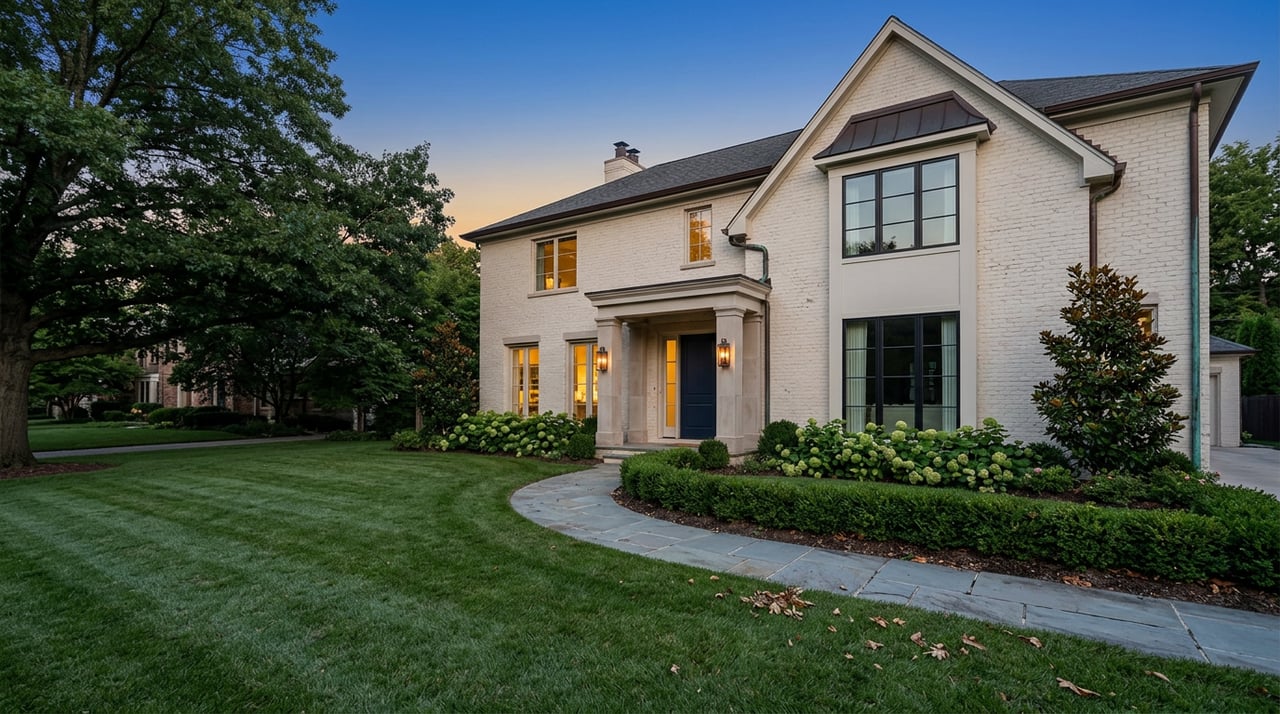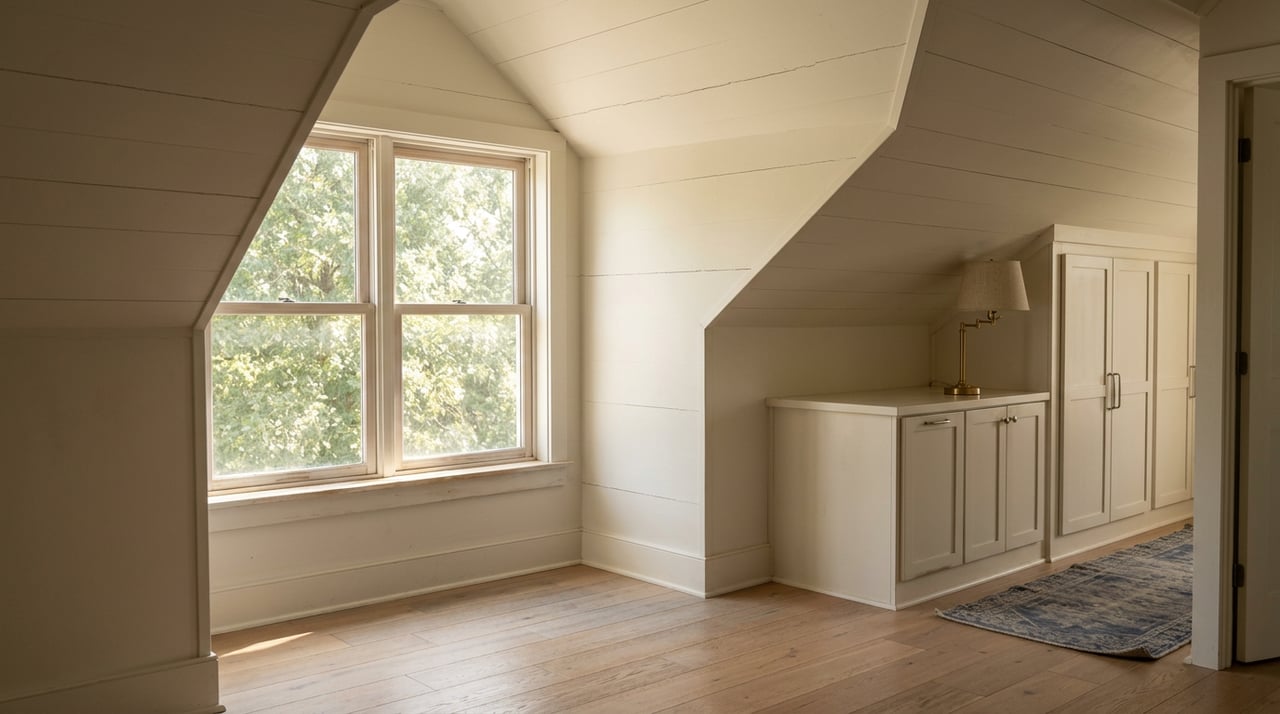
A seller in Apex's historic district finishes off a third-floor space above the garage. Full bath, real windows, a closet big enough to hang more than a coat. The builder called it a bonus room on the permit application, and the town signed off on the framing, the egress window, the smoke detectors, all of it. By any normal measure, it's a bedroom.
Then the listing goes up, and it doesn't say four bedrooms. It says three bedrooms plus a bonus room with full bath. That phrasing isn't a marketing choice. In a fair number of Apex properties, it's the only phrasing the seller's agent is legally allowed to use, because the room that just passed a building inspection with the Town of Apex has never been reviewed by the agency that actually controls how many people can legally sleep in that house: Wake County Environmental Health, the office that issues and tracks septic permits.
Two Permits, Two Agencies, One House
Here is the part that catches people off guard. Finishing an attic or bonus room in Apex requires a permit from the town, and the town's own checklist for that work covers structural framing, insulation, egress requirements, and smoke and carbon monoxide detection. It is a building code review, full stop.
Septic capacity is a separate question, reviewed by a separate agency, using a separate document. The septic permit on file with the county sets a design capacity, generally calculated on two people per bedroom, and that number was fixed when the system was designed and installed, often years or decades before anyone added a bonus room. The Town of Apex can approve your framing. It has no authority over your septic permit, and it will not update it for you.
So a house can be fully permitted for construction and still be capped, on paper, at fewer bedrooms than it visibly has. Nobody broke a rule to get there. The two processes were simply never designed to talk to each other.
Where This Actually Bites in Apex
This isn't a townwide problem. Most new construction inside Apex town limits sits on municipal sewer, and municipal sewer doesn't care how many bedrooms you build. The exposure sits specifically with older housing stock and with parcels that fall outside the town's service boundary.
Historic Downtown Apex, the blocks around Salem Street anchored by the old Union Depot, is the clearest example. Homes like the Baucom-Olive Home, a circa-1895 property that carries Apex Historic Landmark status, were built and expanded across more than a century, often before septic permitting looked anything like it does today. Established neighborhoods further out, including Bella Casa, Abbington, Scotts Mill, and Haddon Hall, mix older construction with additions and renovations from different eras, which is exactly the pattern that produces mismatches between what's built and what's permitted.
The other exposure point is the town's ETJ, its extraterritorial jurisdiction. Parcels out there don't automatically get Apex water and sewer. To connect, an owner has to file an annexation petition with the town's Planning Department, which carries an application fee of $300, reduced to $200 if the annexation is prompted by a well or septic failure. Until that happens, those homes run on private well and septic, full stop, regardless of how recently they were renovated.
The North Carolina Real Estate Commission has published guidance addressing exactly this situation. Brokers are expected to confirm whether a property runs on municipal service or a septic system before listing it, and brokers should not assume septic issues are limited to rural properties. Older in-town neighborhoods where a homeowner never connected to available municipal service carry the same risk.
What the Rule Actually Says
If a septic permit exists and it authorizes three bedrooms, the property can only be advertised as a three-bedroom home, even if a fourth room meets every building code requirement in the state. Listing it as four bedrooms is treated as encouraging overuse of a system that wasn't designed for that load, and the Real Estate Commission has the authority to discipline a broker for it as a form of misrepresentation.
North Carolina brokers are also expected to include a copy of the septic permit with the MLS listing itself, not just reference it. If the permit can't be located after a genuine search, the listing should say so plainly rather than defaulting to whatever the tax record or the floor plan implies.
None of this requires a septic system to be failing or even old. It only requires the paperwork and the floor plan to have drifted apart, which happens constantly in a town where new bonus rooms get added to houses whose original systems were designed for a smaller family.
| Homes on municipal sewer | Homes on septic | |
|---|---|---|
| Who sets bedroom capacity | Not applicable | County-issued septic permit |
| Where the permit lives | N/A | Wake County Environmental Health file |
| Risk from finished bonus rooms | Low | Real, especially in additions or attic conversions |
| Who inspects at point of sale | General home inspector | NCOWCICB-certified septic inspector, separate from general inspection |
| Typical inspection cost in the Triangle | Standard home inspection only | Roughly $400 to $600 for the septic-specific inspection, more if combined with pumping |
What This Means If You're Selling in One of These Pockets
If your Apex home sits in the historic district, in one of the town's older established neighborhoods, or anywhere in the ETJ, the smartest move is to sort this out before you list, not after an offer comes in.
- Locate the septic permit. Start with your own paperwork, then call Wake County Environmental Health if you can't find it.
- Confirm the bedroom count on the permit against what's actually built, including any bonus room, finished attic, or converted space added after the original construction.
- If a mismatch turns up, get ahead of it. A licensed septic contractor can advise whether the existing system has capacity for an upgraded permit, or whether the honest move is to market the home at its permitted count and let the extra room stand on its own as flexible space.
- Budget for a separate septic inspection performed by an NCOWCICB-certified inspector. This is not the same visit as your general home inspection, and in the Triangle it typically runs $400 to $600, sometimes bundled with pumping for $450 to $700.
- If your property is in the ETJ and still on well and septic, ask early whether annexation into town water and sewer is realistic for your timeline. It removes the whole question going forward, though it is its own process with its own fee.
The due diligence period is the worst time to discover any of this. Buyers who are already emotionally committed to a house react very differently to a bedroom-count surprise than buyers who see accurate information in the listing from day one.
A Few Questions Worth Asking
Does this apply to well water too, or just septic? The permit issue is specific to septic capacity. Well water involves its own testing, typically for bacteria and other contaminants, but a well doesn't cap your legal bedroom count the way a septic permit does.
What if the septic permit was issued under a previous owner's name and we can't find it? Start with the county health department, since permits are tied to the property rather than the person. If a genuine search comes up empty, the honest path is disclosing that the permit could not be located rather than guessing at a bedroom count.
Does a home on municipal sewer ever run into this? Not on the septic side. Municipal sewer has no bedroom cap tied to it. The exposure described here is specific to properties still served by an on-site septic system, whether by original construction or because they never connected after annexation became available.
Details like this are exactly why a listing strategy in Apex has to account for what's actually on file with the county, not just what's visible in the floor plan. If you're weighing a sale in one of Apex's older neighborhoods or anywhere near the ETJ boundary and want a clear read on what your home can accurately be marketed as, Sheri Hagerty and her team can walk through it with you and put together a free home valuation that starts with the paperwork, not just the square footage.