Ever wonder why one Durham street is lined with ornate Victorian houses while another features tidy bungalows, mill cottages, or wide postwar ranch homes? If you are buying, selling, or simply learning the city’s housing landscape, understanding Durham’s architectural mix can help you read a neighborhood more clearly and spot the details that shape character and value. Here’s a practical guide to the architectural styles you are most likely to see in Durham and where they tend to appear.
Why Durham Has So Many Home Styles
Durham does not have one single architectural identity. Its neighborhoods were built in different waves, from late-Victorian residential growth to mill village housing, trolley-era suburbs, university-oriented development, and postwar expansion.
That layered history is one reason Durham feels so visually varied. City preservation records show these development periods created clusters of styles across different neighborhoods, rather than one citywide look.
Durham has also taken an active role in protecting historic character since the 1970s. The city lists eight designated local historic districts, and those districts overlap in part with National Register historic districts.
That matters if you are evaluating a home with renovation potential. In local historic districts, exterior changes require a Certificate of Appropriateness, and some established neighborhoods also fall under Neighborhood Protection Overlays that guide compatible infill and preservation.
Queen Anne And Victorian Folk Homes
If you picture Durham’s earliest fashionable residential architecture, this is often where your mind should go. Queen Anne and Victorian Folk homes are among the city’s most recognizable older styles, with asymmetrical shapes, decorative porches, bay windows, and detailed trim.
These homes tend to feel expressive and visually layered. Rather than strict symmetry, you will often notice varied rooflines, projecting sections, and ornament that gives each house a strong individual presence.
Where You’ll See Them
Cleveland-Holloway is especially important here. Durham describes it as the city’s earliest surviving fashionable residential neighborhood, and it contains the city’s largest concentration of Queen Anne houses.
Morehead Hill is another key area to know. It began with Queen Anne-style homes for prominent residents and still reflects that early period in its architecture.
Craftsman Bungalows In Durham
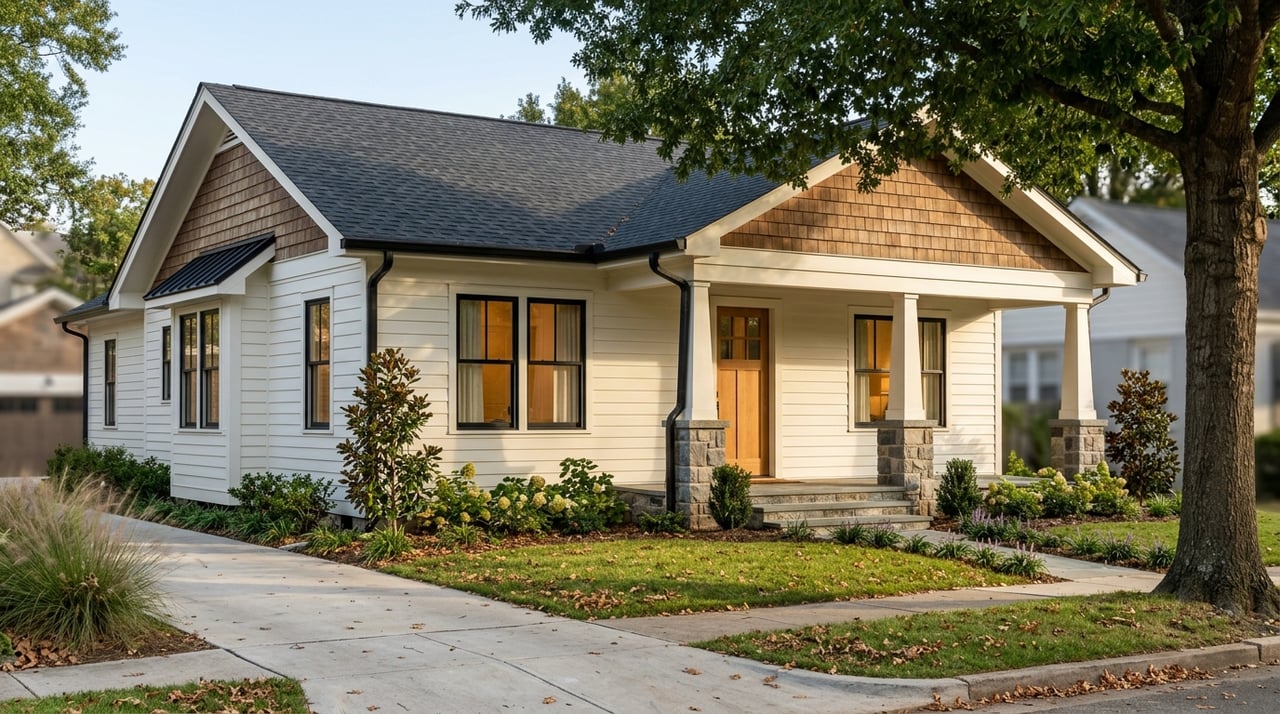
The Craftsman bungalow is one of Durham’s most common early-20th-century home types. If you love approachable scale, strong curb appeal, and practical layouts, this is one of the city’s defining forms.
In Durham, these homes often feature low rooflines, broad front porches, tapered posts or brick piers, exposed rafters, and dormers. The word bungalow usually refers to the house form, while Craftsman describes the detailing that often comes with it.
For many buyers, bungalows strike a nice balance between charm and livability. They are often a go-to choice for people who want architectural character without the larger scale or upkeep questions that can come with some older Victorian homes.
Where You’ll See Them
Strong bungalow concentrations appear in:
- Watts-Hillandale
- Trinity Park
- Trinity Heights
- East Durham
- Old West Durham
- College Heights
Not all Durham bungalows look the same. In working-class areas such as East Durham and Old West Durham, bungalow forms often appear in simpler versions than those found in more affluent early suburbs.
Foursquare And Colonial Revival Homes
If you prefer something more symmetrical and boxy, Durham has plenty of Foursquare and Colonial Revival homes as well. These styles became especially common in middle-class neighborhoods during the 1910s and 1920s.
American Foursquares are usually easy to spot because of their compact, practical shape. Colonial Revival homes often present a more formal, balanced appearance, which can feel classic and orderly from the street.
These styles often appear right alongside bungalow streetscapes. That mix is part of what makes Durham neighborhoods so interesting, since one block may include several architectural traditions from the same growth period.
Where You’ll See Them
Look for these homes in:
- Watts-Hillandale
- Trinity Park
- Morehead Hill
- Trinity Heights
- College Heights
Mill Houses And Worker Cottages
Durham’s industrial growth left a lasting mark on its housing stock. Mill houses and worker cottages are typically more modest and straightforward than the city’s high-style homes, but they are an important part of Durham’s architectural story.
These houses were built for practicality. You will often see smaller footprints, simpler detailing, and patterns of narrow lots with small to medium-sized homes.
For buyers who appreciate authenticity, these areas can offer a strong sense of place. They also help explain how Durham’s built environment grew alongside manufacturing and industry.
Where You’ll See Them
East Durham is one of the clearest examples. The area grew from the Durham Cotton Manufacturing Company village and is specifically described as containing plain and modest mill houses.
Old West Durham and the Durham Cotton Mills area are also key reference points. These areas remain important for understanding Durham’s worker-housing history and simpler bungalow forms.
Revival Styles And High-Style Houses
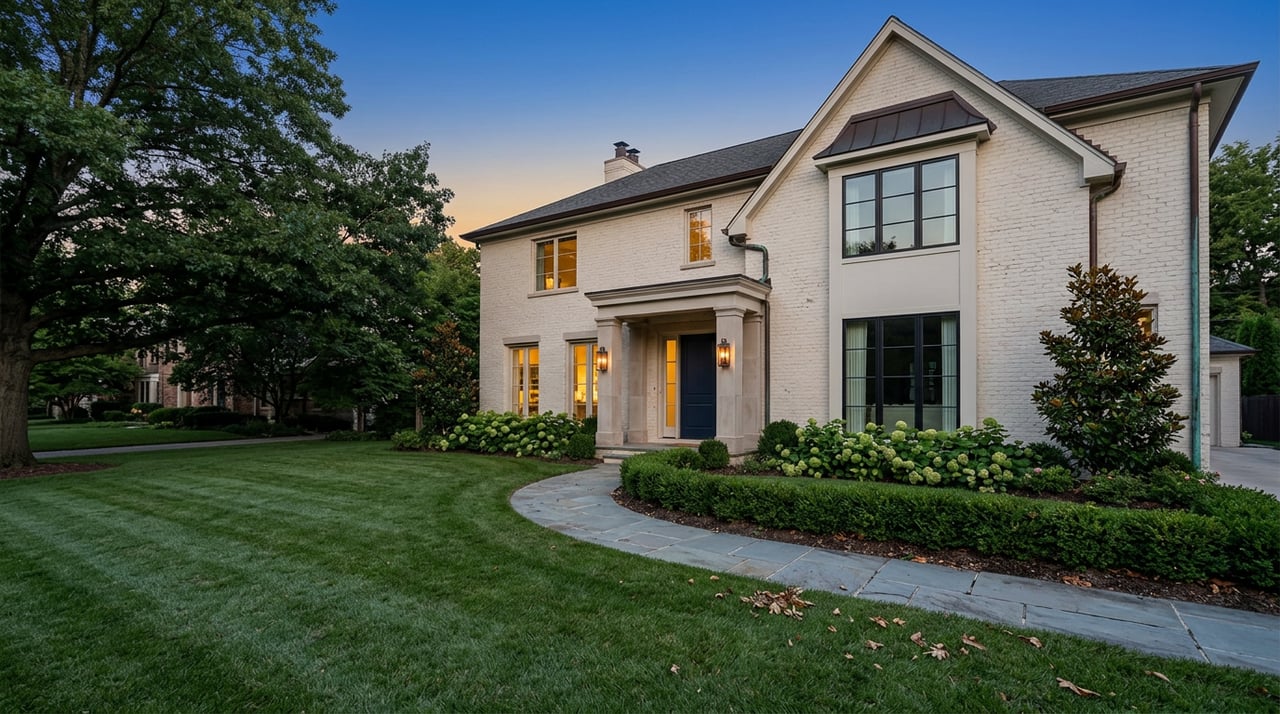
Durham also includes a smaller but notable set of more elaborate revival-style homes. These are not spread evenly across the city, but in the right neighborhood, they add impressive variety.
Styles named in Durham preservation records include Tudor Revival, Spanish Colonial Revival, Chateauesque, Colonial Revival, and Spanish Mission. These homes are often found on more prominent lots and in areas associated with higher-style early residential development.
For design-conscious buyers, these houses can be especially compelling because they offer distinct architecture that stands apart from more common forms. They also tend to contribute to the visual richness that makes certain Durham neighborhoods memorable.
Where You’ll See Them
Morehead Hill stands out for its range of high-style architecture. Preservation records note Chateauesque, Spanish Colonial Revival, Colonial Revival, Tudor Revival, and Craftsman examples in the neighborhood.
Trinity Heights is another area to know. It includes Spanish Mission, Colonial Revival, Foursquare, Queen Anne, and bungalow examples, which shows how mixed Durham neighborhoods can be.
Ranch, Minimal Traditional, And Later Homes
Not every notable Durham home is prewar. The city’s later residential growth added Ranch, Minimal Traditional, and other mid-century housing types, especially in neighborhoods with larger lots and development that continued into the 1930s, 1940s, and 1950s.
These homes often feel wider, more horizontal, and less ornamental than earlier styles. In practical terms, that can mean simpler rooflines, easier flow, and a different relationship between house size and lot width.
For many buyers, this period offers a different kind of appeal. You may find more spread-out settings and house forms that reflect Durham’s transition into automobile-oriented suburban development.
Where You’ll See Them
College Heights is an especially useful example. Its historic nomination notes the popularity of Period Cottage, Minimal Traditional, and Ranch styles from the 1930s into the 1950s, and it points out that wider lots could support wider buildings, including Ranch houses.
Forest Hills, Hope Valley, and Duke Forest also help tell this part of Durham’s story. These areas are tied to Durham’s move into curving suburban layouts, larger lots, and later residential development.
Contemporary Infill In Historic Areas
One of the most useful things to understand about Durham is that many neighborhoods are style mixes, not frozen time capsules. Preservation and planning documents show that the city often anticipates compatible contemporary construction rather than strict stylistic purity.
That is especially relevant if you are comparing older homes with newer infill. In some Durham neighborhoods, new construction is expected to fit the established character, even if it does not copy an older style exactly.
Trinity Heights is a good example. Its preservation plan explicitly encourages compatible contemporary architecture for new construction.
What Buyers And Sellers Should Notice
If you are shopping for a home in Durham, style can tell you more than just what looks appealing. It can also hint at the era of development, lot pattern, neighborhood rhythm, and the kind of updates or review process a property may involve.
A good starting point is to look at three things:
- The overall form of the house
- The age and pattern of nearby homes
- Whether the property sits in a local historic district or overlay area
If you are selling, architectural style can also help shape positioning. A well-preserved bungalow, a distinctive Victorian, or a later Ranch on a larger lot may each speak to a different buyer, and understanding that difference can sharpen presentation and marketing.
Neighborhoods Worth Exploring By Style
If you want a simple way to tour Durham through architecture, these areas offer a helpful starting point:
- Cleveland-Holloway and Morehead Hill for Queen Anne, Victorian-era homes, and early high-style houses
- Trinity Park, Watts-Hillandale, Duke Park, and Trinity Heights for bungalows, Foursquares, and revival-era homes
- East Durham and Old West Durham for mill houses, worker cottages, and simpler bungalow forms
- College Heights, Forest Hills, Hope Valley, and Duke Forest for later suburban development, wider lots, and Ranch-era housing
- Downtown Durham for an urban contrast that includes Late 19th and 20th Century Revivals and Art Deco in the historic district
Why Architectural Context Matters
In a market as layered as Durham, architecture is not just about curb appeal. It gives you clues about how a neighborhood developed, what kind of homes tend to cluster there, and what changes may be reviewed for compatibility.
That context can be useful whether you are relocating to the Triangle, searching for a distinctive older home, or preparing to sell a property with character. The more clearly you understand Durham’s architectural vocabulary, the easier it becomes to make informed decisions with confidence.
If you are considering a move in Durham or want help positioning a home with architectural character, connect with Sheri Hagerty for thoughtful, locally informed guidance.
FAQs
What architectural styles are most common in Durham, North Carolina?
- Durham commonly includes Craftsman bungalows, Foursquare homes, Colonial Revival houses, Queen Anne and Victorian Folk homes, mill houses, worker cottages, Ranch homes, and Minimal Traditional houses.
Where can you find Victorian homes in Durham, North Carolina?
- Cleveland-Holloway and Morehead Hill are two of the best-known areas for Durham’s late-Victorian architecture, including Queen Anne homes.
Where can you see bungalow homes in Durham, North Carolina?
- Strong bungalow concentrations appear in Watts-Hillandale, Trinity Park, Trinity Heights, East Durham, Old West Durham, and College Heights.
What should buyers know about historic districts in Durham, North Carolina?
- Durham’s local historic districts require a Certificate of Appropriateness for exterior changes, and some neighborhoods also have overlay rules that guide compatible infill and preservation.
Are Durham neighborhoods usually defined by one home style?
- No. Durham preservation records show that many neighborhoods are best understood as style mixes, with bungalows, Foursquares, revival homes, and later infill often appearing in the same district.
Where can you find Ranch and mid-century homes in Durham, North Carolina?
- College Heights, Forest Hills, Hope Valley, and Duke Forest are useful areas to reference for Durham’s later suburban development, including Ranch-era housing.